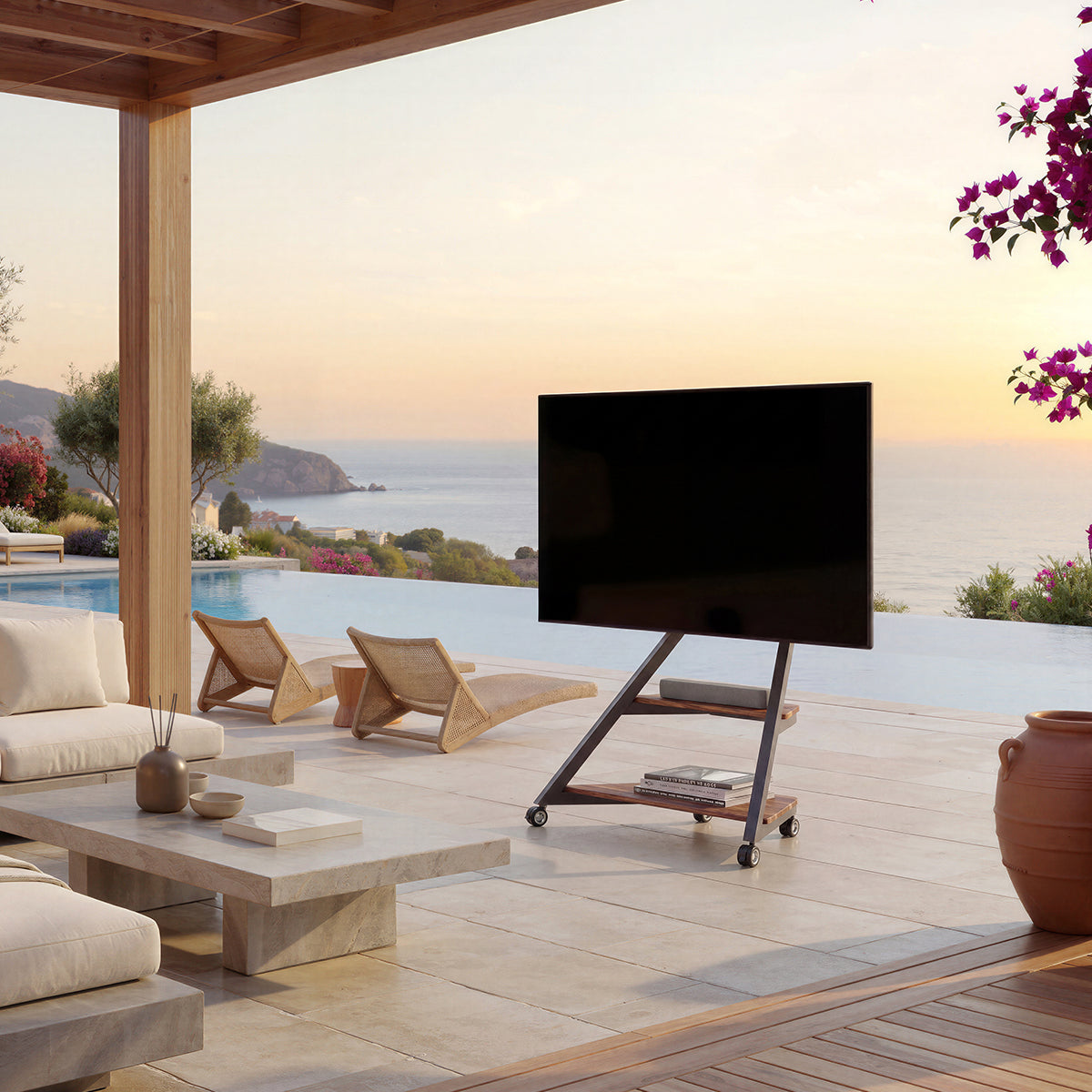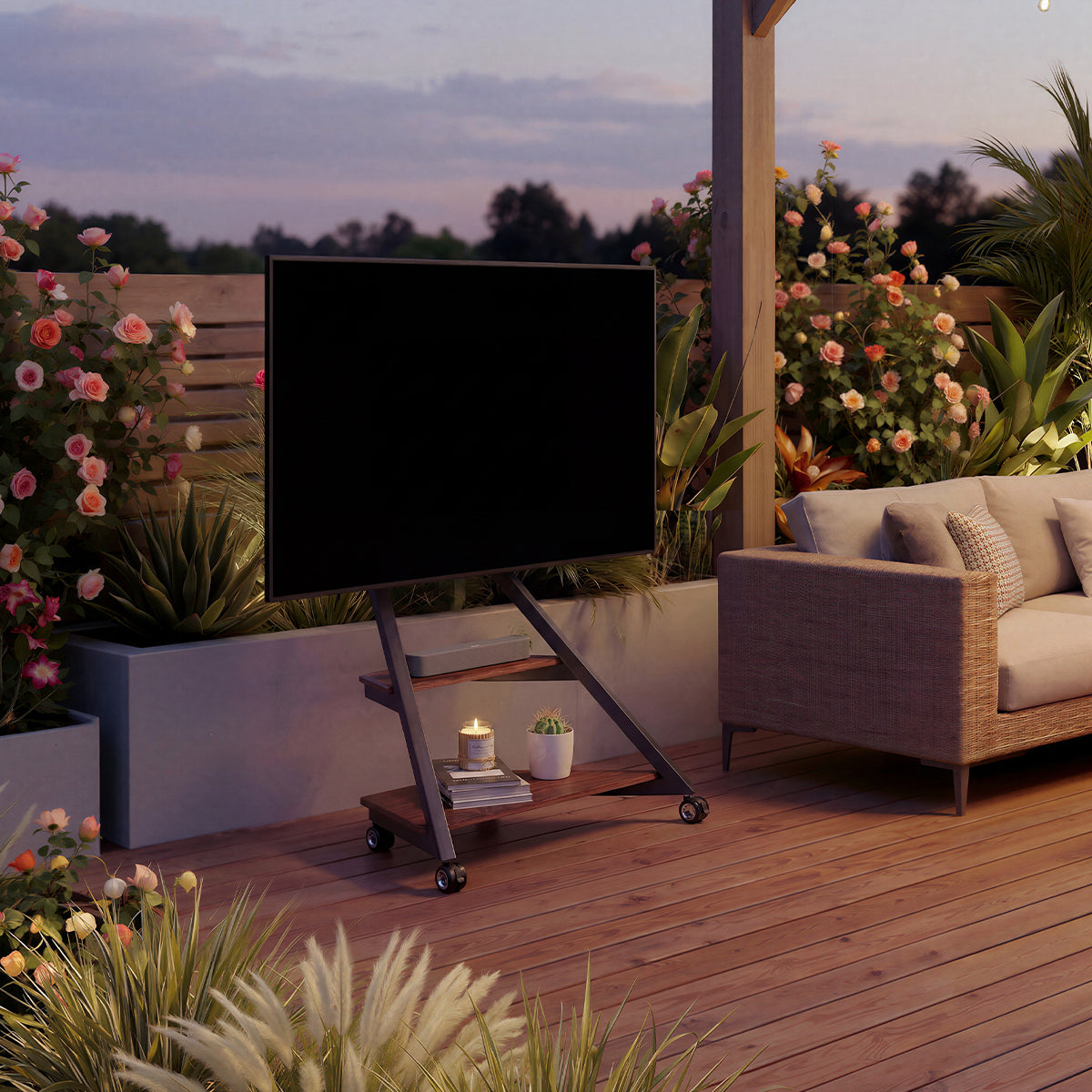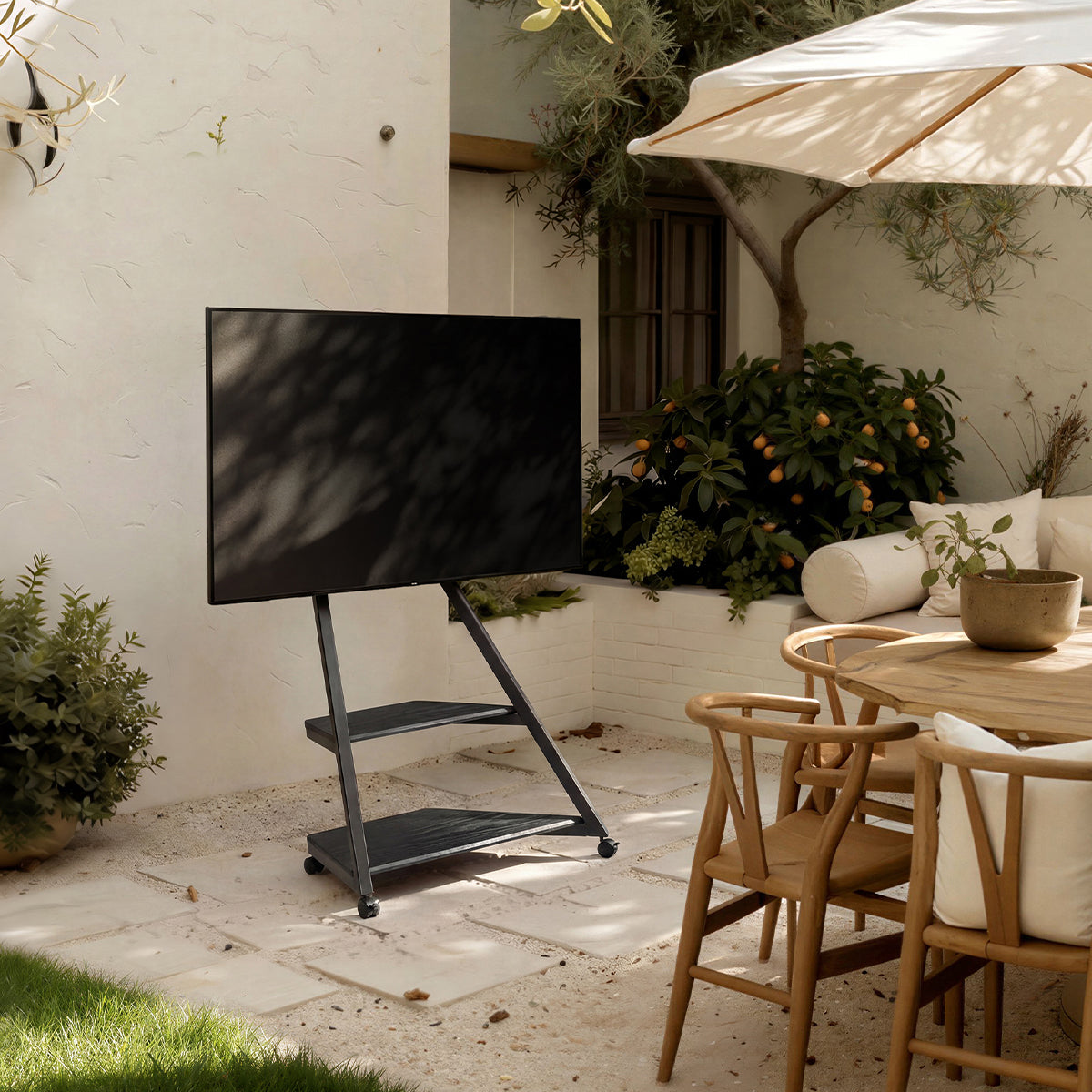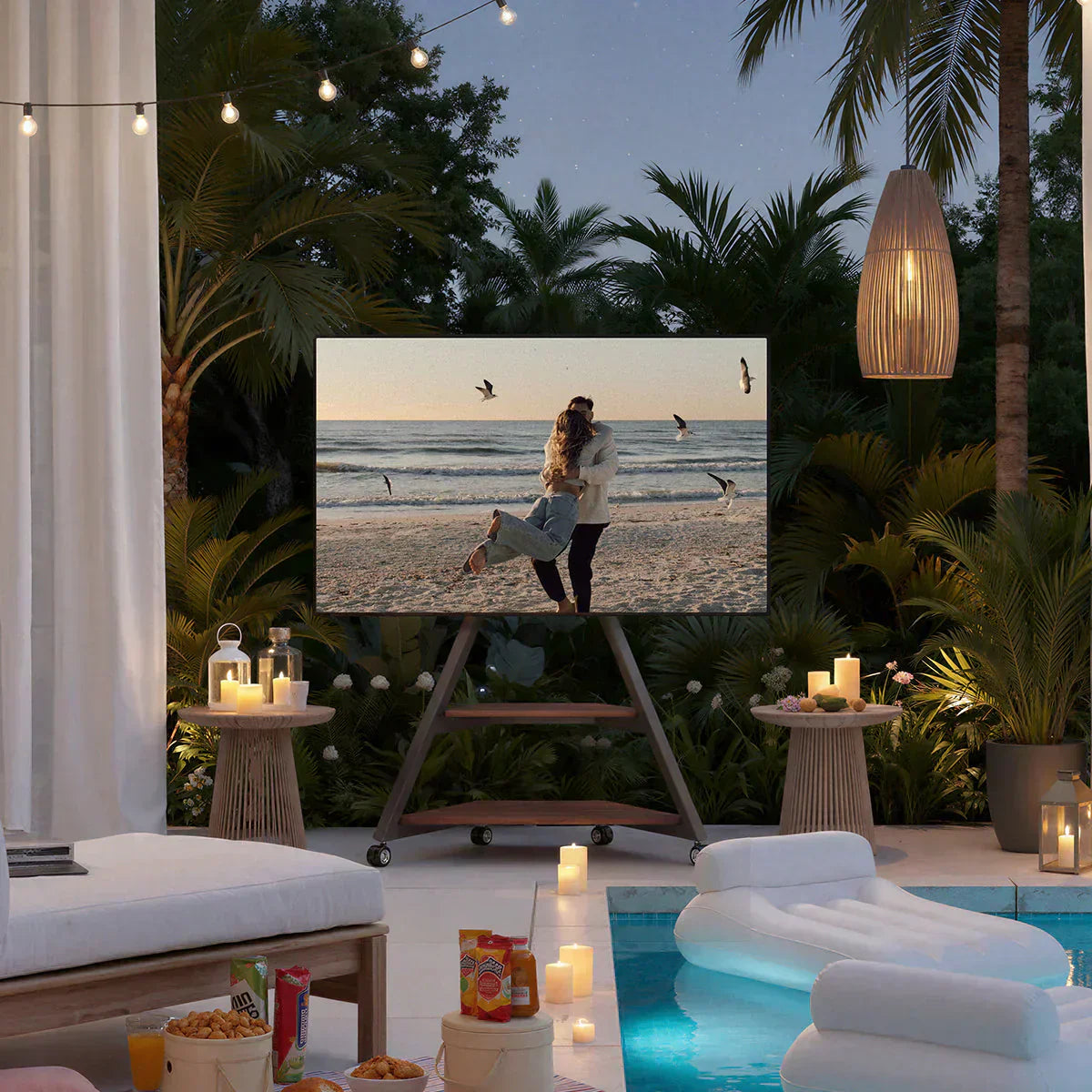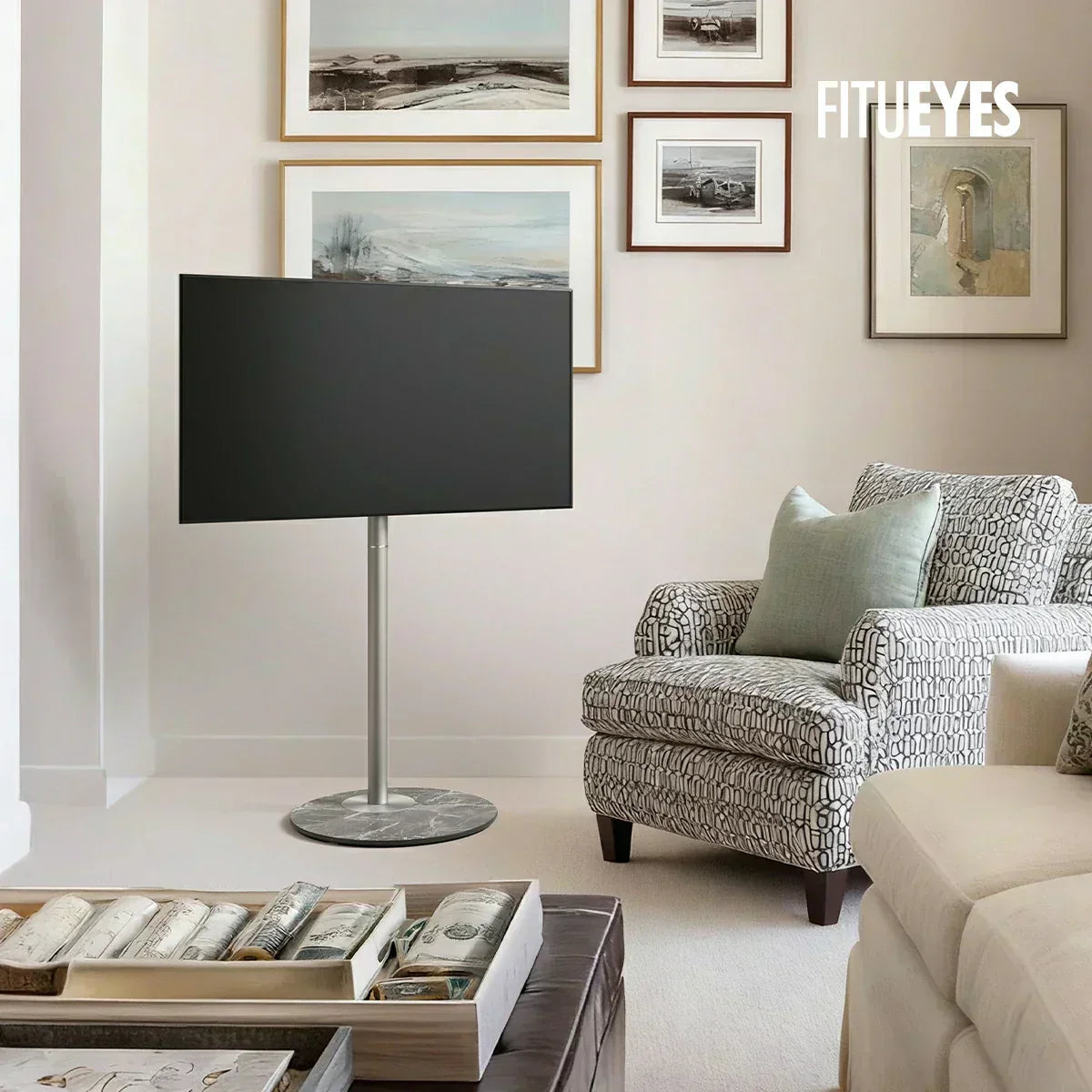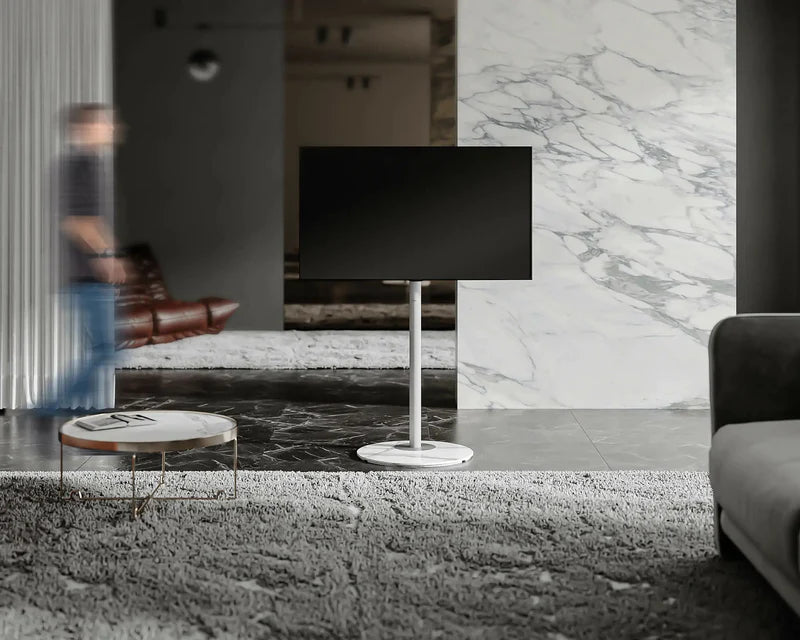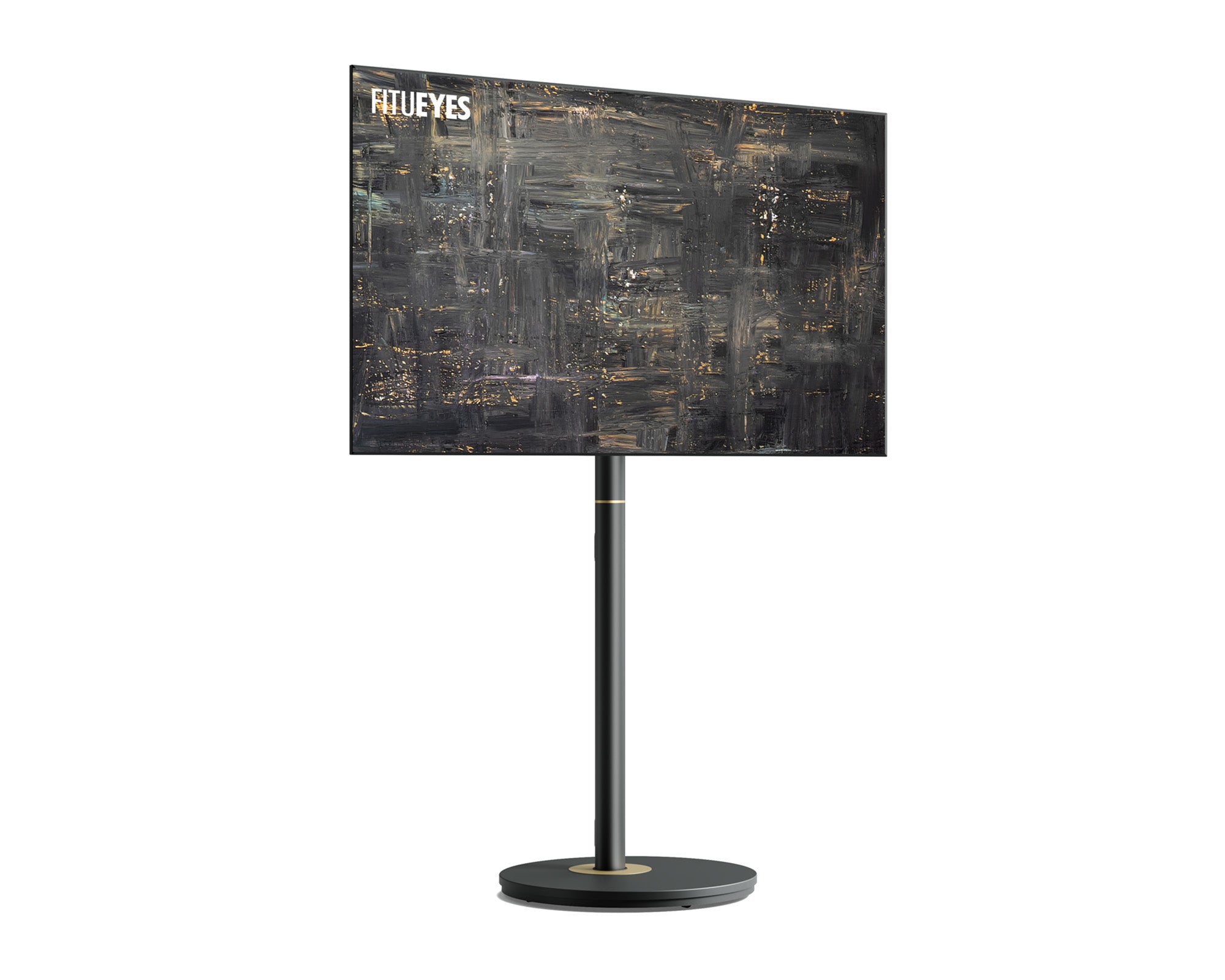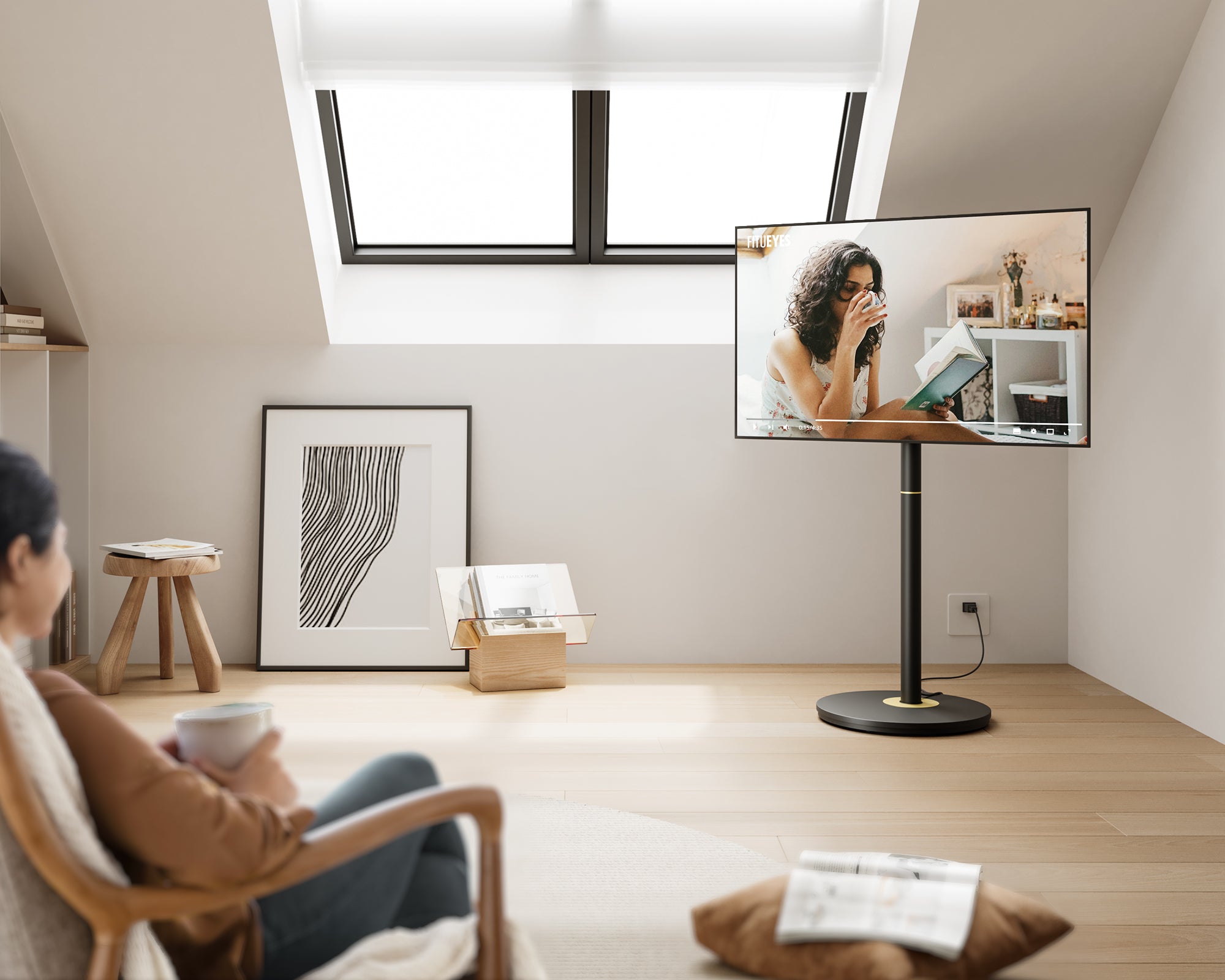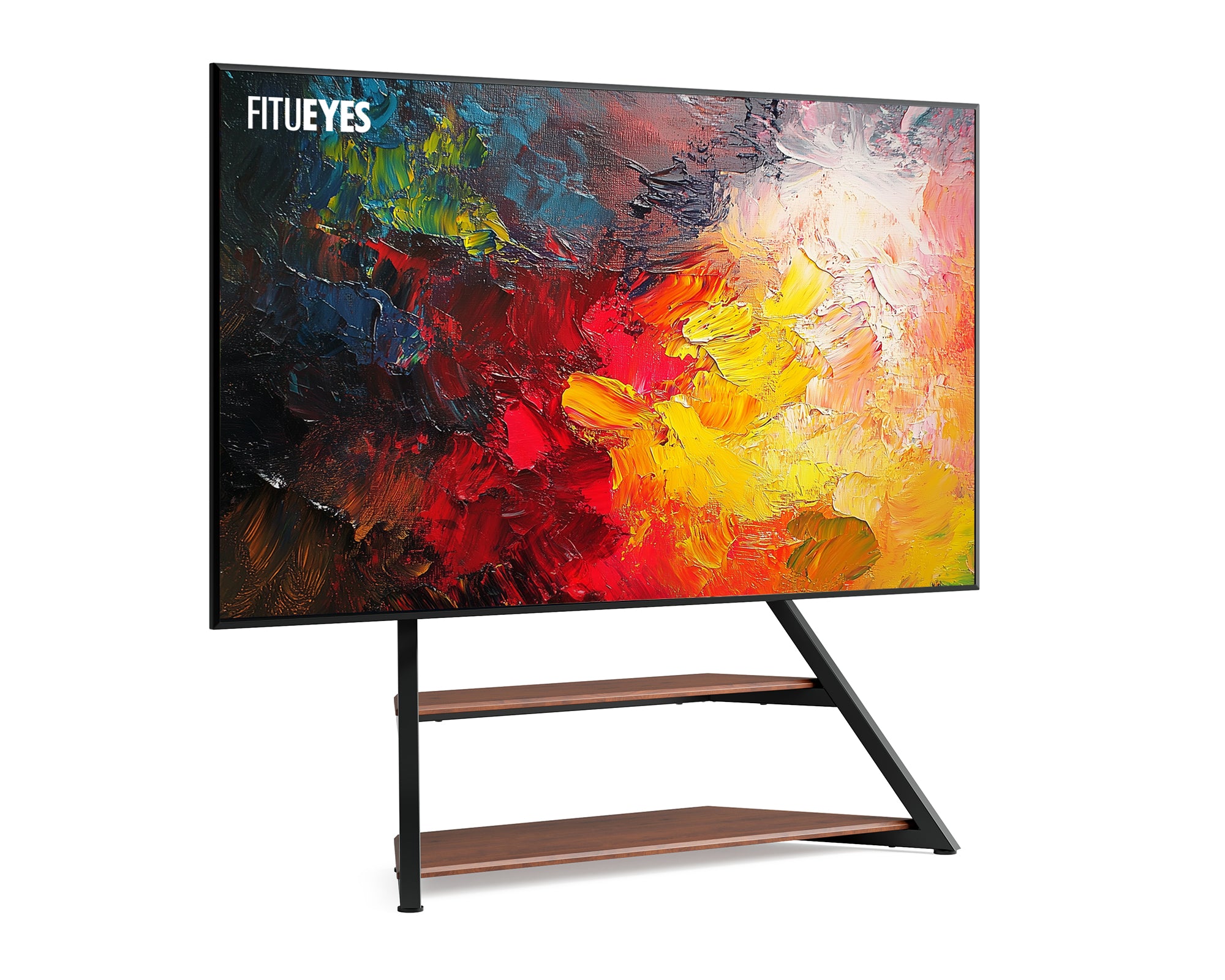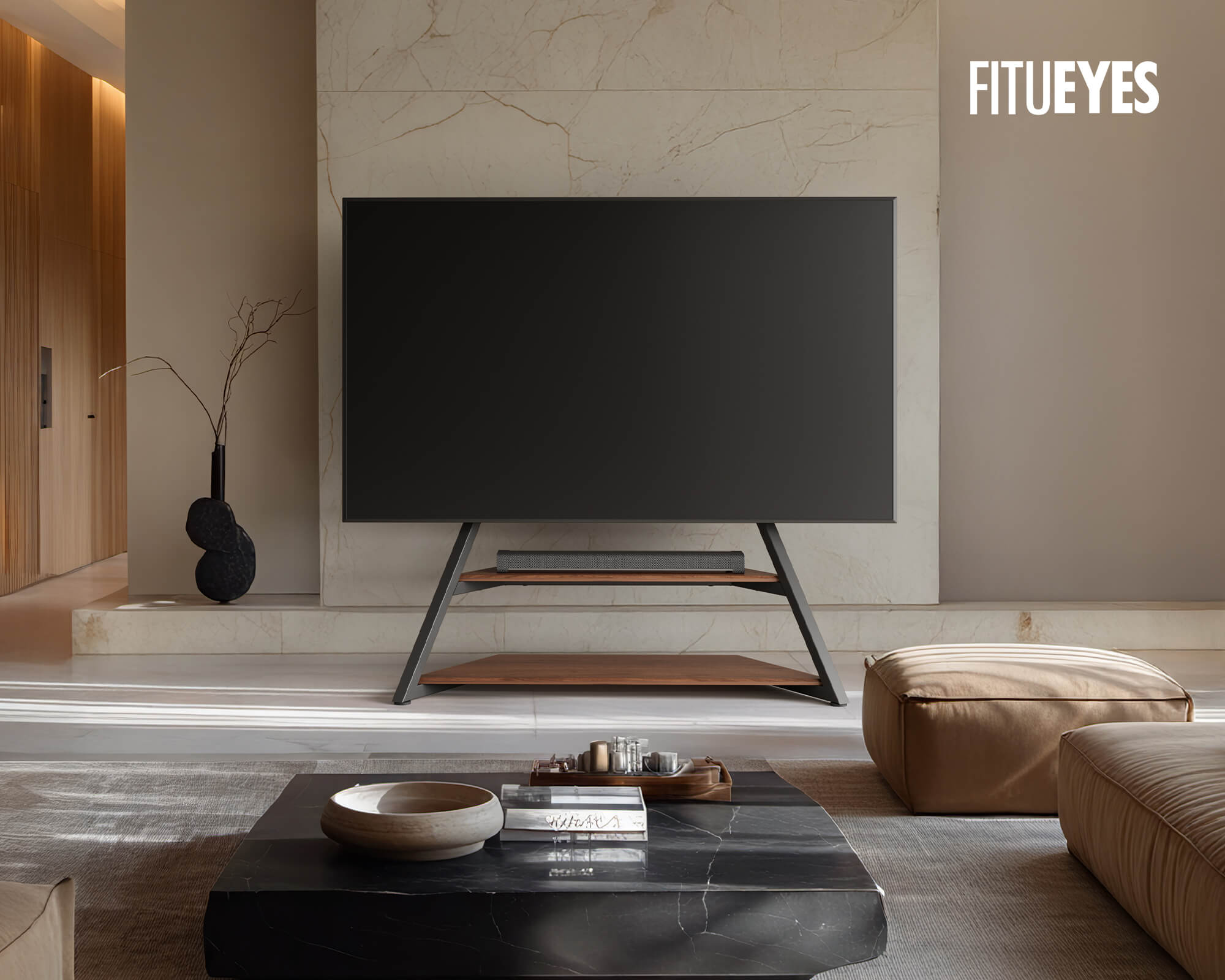



Are portable TV stands safe? The short answer is yes—provided they feature a low centre of gravity and dual locking mechanisms.
For larger screens, a safe portable stand requires three specific features:
- Weighted Base: The base must be heavier and wider than the TV mount to prevent tipping.
- Locking Systems: Industrial-grade wheel brakes are essential to prevent unwanted movement, and VESA bolts must securely fix the TV to the frame.
- Rubber Castors: Polyurethane (PU) or rubber wheels maintain traction and reduce vibration on wooden floors or tiles.
This guide covers the physics of stability and safety protocols for moving your TV without damaging your equipment or your home.
The physics of stability: Why do modern portable TV stands look the way they do?
To understand why a mobile TV stand is safe, you must understand the principles of tipping. Tipping occurs when the centre of gravity moves beyond the base of support. Quality stands prevent this through strategic weight distribution.
Low Centre of Gravity
A common misconception is that a high-mounted TV makes the stand top-heavy.
- The Reality: Safety depends on the base. A safe stand uses a weighted base (steel or tempered glass) that is significantly heavier than the top mount.
- The Effect: This weight acts as an anchor. Even with a 75-inch screen, the majority of the mass remains at floor level, making it physically difficult to tip.
The Lock-and-Roll Mechanism
A portable stand functions as a stationary unit most of the time. Once the locking castors are engaged, the unit becomes a rigid, fixed structure—often more stable than a lightweight flat-pack cabinet.

5 Golden Rules for Moving Your Rolling TV Cart Safely
Most accidents result from improper handling rather than product failure. Follow these steps to ensure total safety:
1. The "Waist-High Rule" (Stop Pushing the Screen)
This is the most critical rule for stability.
- The Risk: Pushing the stand by the TV screen creates a lever effect. If the wheels hit a rug edge, the top continues moving while the bottom stops.
- The Fix: Never touch the screen to move the stand. Grip the central metal pillar at waist height. Pushing from the middle aligns the force with the centre of gravity.
2. The Extension Lead Tip
Trailing cables are a major tripping hazard.
- The Solution: Use cable ties to secure an extension lead to the back of the stand's column. Plug your TV and consoles into this. This leaves only one main power cable to manage when moving the unit.
3. Mastering the "Rug Transition"
Moving from hard floors to thick rugs can cause wheels to stick.
- The Technique: Approach the rug at a slow walking speed to use momentum. For thick carpets, pull the stand backward over the edge rather than pushing forward. Pulling offers better control over the angle.
4. The 3-Month Maintenance Check
Movement creates vibration, which can loosen hardware over time.
- The Protocol: Every few months, check the four VESA screws on the back of the TV and the bolts on the castors. A quick tighten ensures the hardware remains rock-solid.
5. Unload the Top Shelf
- The Rule: Always store heavy gear (such as amplifiers or UPS units) on the bottom shelf near the floor to maintain that crucial low centre of gravity.
Child & Pet Proofing Your Mobile TV Stand
For households with toddlers or pets, we recommend these extra precautions:
The "Parking Mode" Protocol
A stand left in the center of a room is an obstacle.
- "Parking Mode": When not in use, roll the stand into a corner or against a wall and engage all brakes.
- Anchoring Options: If the stand has a permanent "home base," you can use an anti-tip wall strap. Simply clip the strap when parked for maximum peace of mind, and unclip it when you need mobility.

Floor Protection: Will it Mark my Hardwood?
Heavy stands can damage floors if the wrong wheels are used.
Plastic vs. Rubber Casters
Wheel material determines floor safety.
- The Problem: Hard plastic wheels are noisy and can scratch wood or crack tiles.
- The Solution: FITUEYES stands use rubberised PU castors. These are soft, silent, and glide over premium flooring without leaving a mark.
Technical Check: How to Choose a Safe Stand
Check these two specifications to verify safety before purchasing.
Weight Capacity Over Screen Size
Weight limits matter more than screen size ratings.
- The Rule: If your TV weighs 25kg, choose a stand rated for at least 35kg. This extra capacity ensures the frame won't flex.
The "Locking Bracket" Essential
The TV must be bolted to the stand, not just hung.
- The Feature: Ensure the stand uses "Locking Brackets" or "Safety Bolts."
- Why it Matters: Gravity alone is insufficient for mobile stands. FITUEYES stands use safety bolts to physically lock the bracket to the rail, preventing the TV from bouncing off during movement.
FAQs About TV Stands on Wheels
Q: Can I leave my TV on the stand permanently?
A: Yes. Many users choose TV stands on wheels for permanent use to facilitate cleaning or viewing angle adjustments.
Q: Do I need to remove the TV to move the stand?
A: No. If you follow the "Waist-High Rule" and manage cables, the fully assembled unit is safe to move.
Q: Will the stand tip on thick carpet?
A: It will not tip if moved correctly, but rolling is more difficult. For deep pile carpets, select stands with larger diameter wheels (2 inches+) for easier movement.

Summarize: Are portable TV stands safe?
Mobility is perfectly safe when combined with proper engineering. By selecting a stand with a weighted base and following basic safety protocols, you can enjoy a flexible entertainment setup without compromise.
Ready to find the perfect fit? Explore the FITUEYES Rolling Series—where industrial safety meets modern British living.